



Social Media
What’s Next for Real Estate Marketing in 2026?

Carolina O. Hoyos - Creative Director
February 5, 2026
.jpg)
Real estate marketing looks nothing like it did ten years ago — but that doesn’t mean everyone should be doing the same thing.
The truth is, how you market yourself depends entirely on who your clients are and how you run your business. A commercial agent doesn’t need the same online presence as someone working with downsizers or first-time buyers. Some still thrive on referrals and reputation, while others are building digital funnels and running ads.
The difference now is that you can’t hide behind one-size-fits-all marketing anymore.
A decade ago, “marketing” meant getting your name on as many surfaces as possible: bus benches, flyers, postcards, radio.
Now, visibility looks different — it’s online, but it’s also smarter.
If your brand is targeting investors, you don’t need to be posting dance reels on Instagram. If you’re going after relocations or lifestyle buyers, your web and social presence have to actually speak to those people.
It’s not about being everywhere. It’s about being consistent and intentional where it matters.
Let’s be honest: a website on its own won’t drive leads.
Not if it looks like every other template site in your market. Not if there’s no message behind it.
The agents who are actually converting online aren’t just “online.” They’ve built brands that communicate who they are and who they’re for — with a tone, look, and strategy that align.
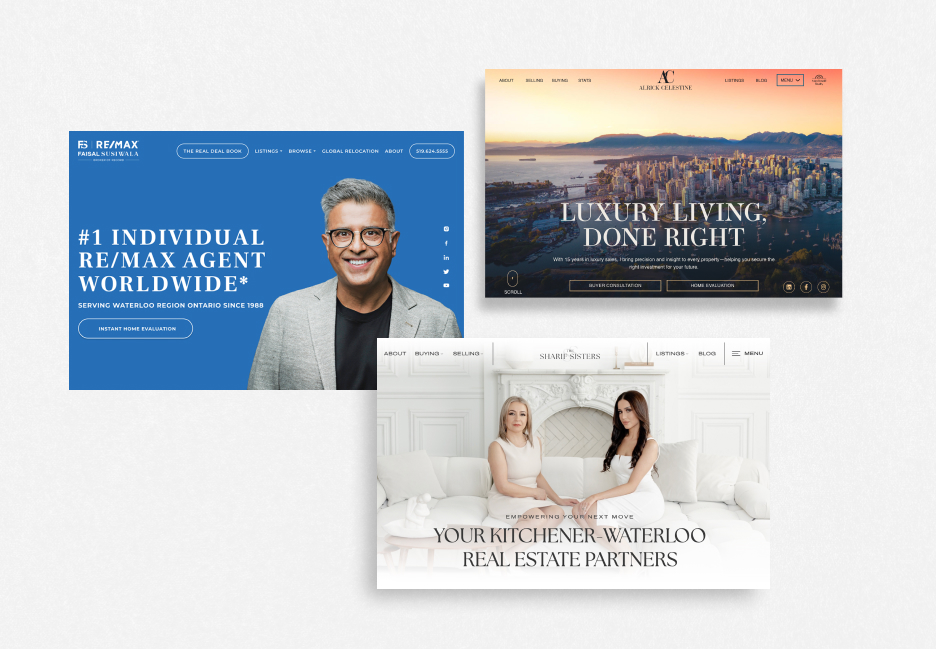
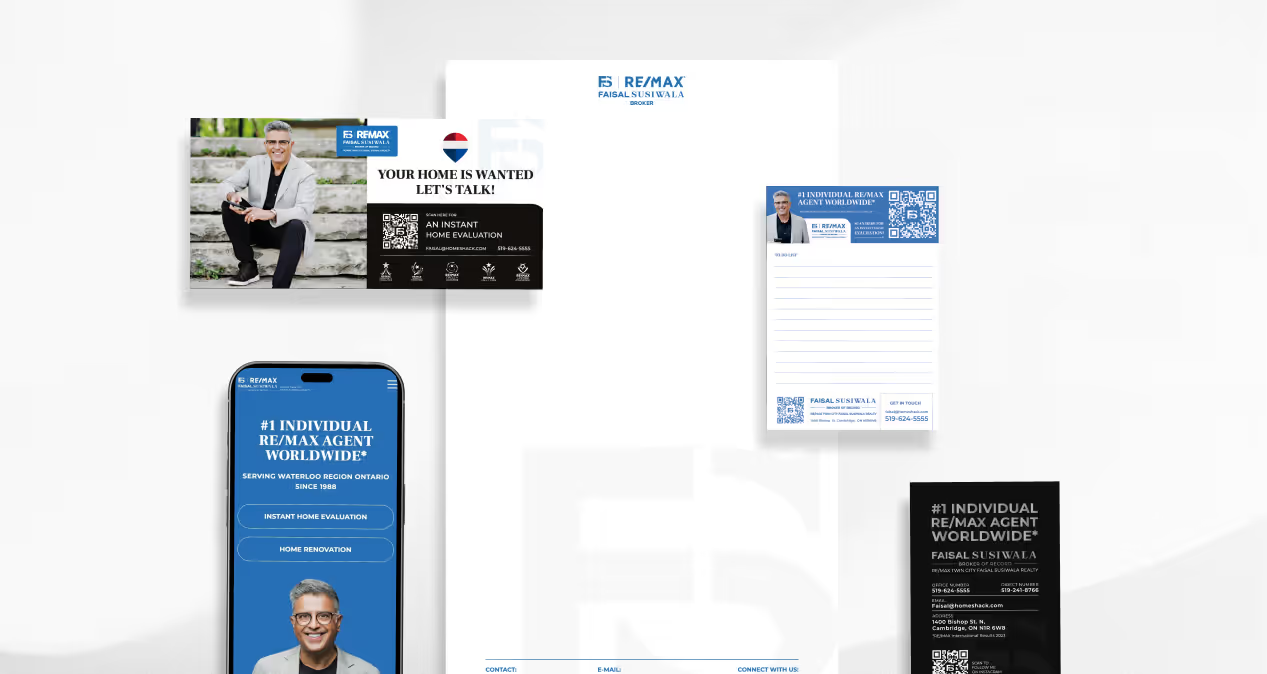
That’s why we build everything from custom sites like The Sharif Sisters or Faisal Susiwala, to custom MyRealPage designs for agents like Kelly Reimer and The Pike Group — because even within platforms, you can still have a brand that feels different and intentional.
The website is only one piece. What matters is what it says about you.
There’s no shame in being old school— marketing-wise. (Just don’t let that apply to your design.)
Many agents still get 80% of their business from referrals, and that’s completely valid. But the ones who grow past that don’t abandon what works — they bridge it.
They bring that same relationship-driven energy online: through video, client stories, or community content that builds trust with new audiences before the first call.
It’s not about replacing what’s always worked. It’s about scaling it with better tools.
The next wave of real estate marketing won’t be about who spends more — it’ll be about who communicates better.
The agents winning long-term will:
Marketing in 2025 and beyond is less about trends — and more about alignment. If your brand and strategy don’t match your audience, it doesn’t matter how modern your website is.
Real estate marketing has evolved — but it hasn’t outgrown relationships.
The biggest shift is that now, your brand has to do what your handshake used to do: communicate trust, credibility, and personality — instantly.
That’s what we help agents build at Zinda: real brands that look sharp, rank fast, and connect with the right people.
👉 Explore our Real Estate Website Solutions
%20(1).jpg)
.jpg)

